
Elbow Fracture
An elbow fracture is a break in one or more of the bones that make up the elbow joint — the humerus (upper arm bone), radius, and ulna (forearm bones). These fractures are commonly caused by falls, direct trauma, or accidents and can affect both children and adults.
Elbow fractures can occur due to falls, twisting injuries or blunt force trauma. Elbow fractures can be addressed with surgical or non-surgical treatments, depending on the severity of the break.
What is an elbow fracture?
An elbow fracture is a fracture at the tip of the elbow. This can happen as a result of trauma such as a direct blow, falling on the elbow or falling on an outstretched hand.
Types of Elbow Fractures
- Distal Humerus Fracture – break in the lower end of the upper arm bone.
- Olecranon Fracture – fracture of the pointed bone of the elbow (part of the ulna).
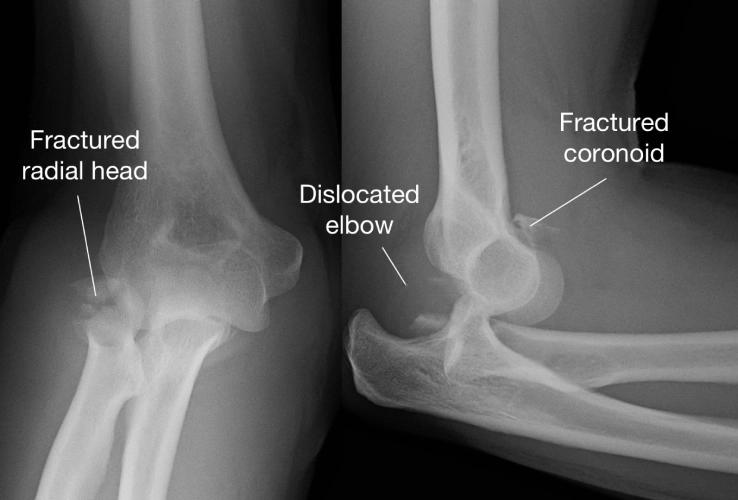
- Radial Head Fracture – break in the top of the radius near the elbow joint.
- Coronoid Fracture – less common, involving a small part of the ulna that stabilizes the joint.
Common Causes
- Falling on an outstretched hand or directly on the elbow
- Sports injuries (especially contact sports)
- Motor vehicle accidents
- Repetitive stress or overuse (in rare cases, stress fractures)
Symptoms
- Severe pain around the elbow
- Swelling and bruising
- Inability to move the arm or bend the elbow
- Visible deformity or abnormal angle
- Numbness or tingling (if nerves are affected)
Diagnosis
- Physical examination to check movement, swelling, and tenderness
- X-rays to confirm the type and severity of fracture
- CT or MRI scans in complex cases to evaluate bone and soft tissue damage
Treatment Options
Treatment depends on the type and severity of the fracture :
Non-Surgical Treatment
- Immobilization with a cast or splint for minor or stable fractures
- Pain relief medication
- Physiotherapy after healing to restore strength and flexibility
Surgical Treatment
- Open Reduction and Internal Fixation (ORIF) with plates, screws, or pins for unstable fractures
- Joint replacement in severe or complex fractures (especially in older patients)
Recovery and Rehabilitation
- Healing usually takes 6–12 weeks, depending on the fracture.
- Early physiotherapy is important to prevent stiffness and improve mobility.
- Full recovery may take several months, especially for severe fractures.
Possible Complications
- Joint stiffness or limited motion
- Post-traumatic arthritis
- Nerve or blood vessel injury
- Malunion (bones healing in the wrong position)